
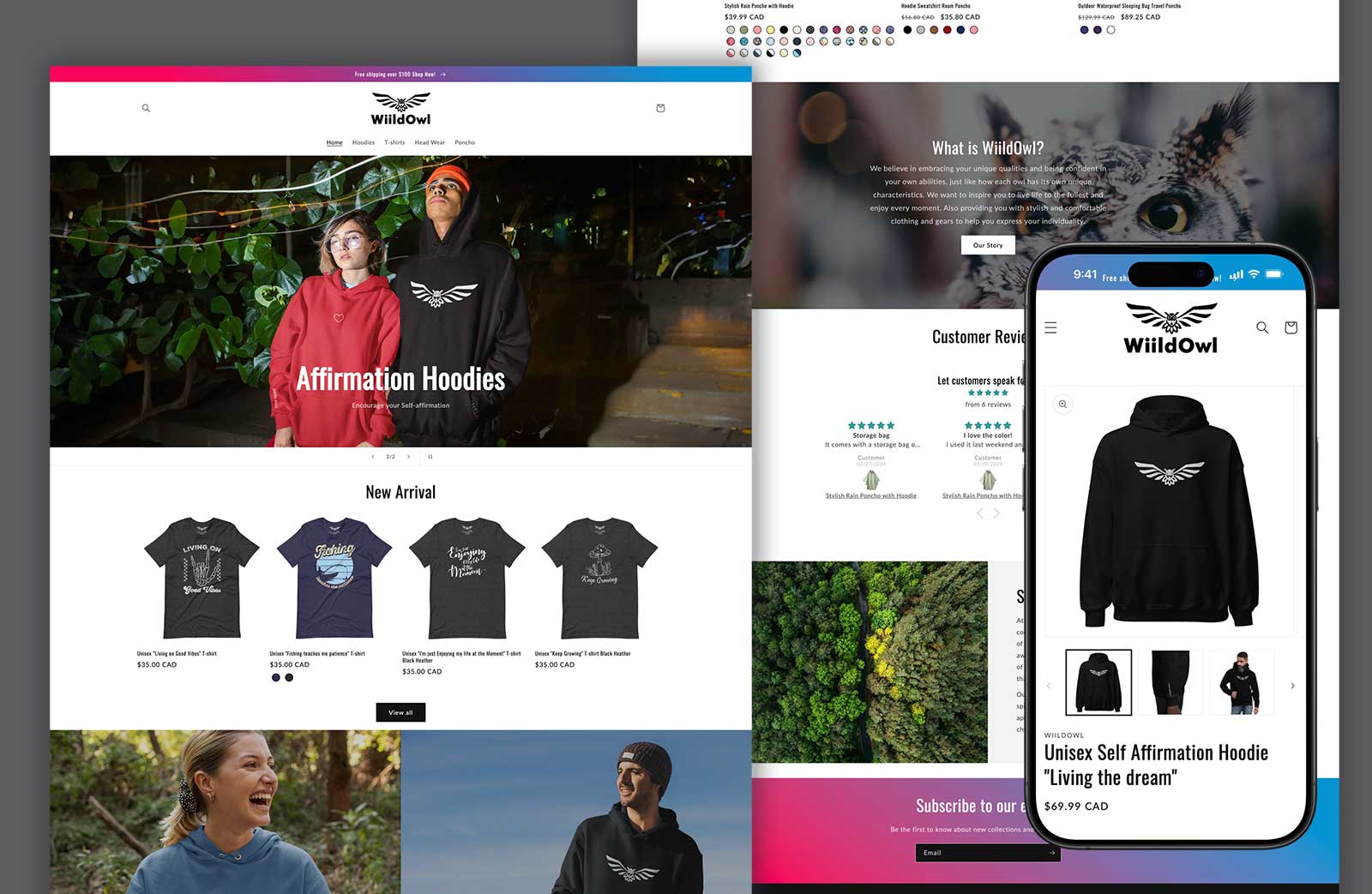
WiildOwl is an affirmation and spirituality-based e-commerce brand developed around apparel and digital products, with a focus on building a flexible and scalable direct-to-consumer business.
Rather than treating it as a simple online shop, we used the project as a real working environment to test brand direction, product structure, platform fit, social content, and traffic measurement.
Overview
WiildOwl began with physical products using a print-on-demand model, then later expanded into digital products as part of a broader scalability strategy.
The initial product direction included affirmation-based apparel, angel number designs, zodiac-themed items, and other symbolic products designed to connect with identity and mindset. Over time, the brand evolved beyond product creation into a larger exercise in e-commerce strategy, technical setup, content testing, and store optimization.
The challenge
The challenge was not just launching products, but building a business model that could stay lean while still allowing room for brand growth, testing, and future expansion.
Physical products created clear limitations. Shipping, fulfillment structure, and product operations add complexity as a store grows. We were already familiar with that reality how much time and operational effort logistics can consume, especially once scale increases.
Because of that, we intentionally started WiildOwl with print on demand. It allowed me to remove fulfillment overhead, reduce risk, and focus on the parts that mattered most in the early stage:
- brand direction
- product positioning
- storefront design
- traffic and content testing
- conversion flow
- market validation
Later, we added digital products because they offered a more scalable path with fewer operational constraints.
Approach
AkuyDesign built WiildOwl with a practical hybrid strategy: keep operations light, build the brand properly, and create room to test what works before increasing complexity.
Key decisions included:
- using print on demand to avoid inventory and logistics burden
- expanding into digital products for better scalability
- testing product themes based on audience resonance
- building the store in a way that could evolve with the brand
- using the project to test content, traffic flow, and tracking methods
This allowed the business to function as both a live brand and a testing ground for broader e-commerce and marketing strategy.
Platform shift: Shopify to WooCommerce
WiildOwl originally started on Shopify because it was fast to launch and suitable for validating ideas quickly.
As the brand developed, we began to see limitations in how much we could customize the experience compared to what we wanted long term. We needed more freedom in page structure, content presentation, campaign landing paths, and technical control.
That led to a shift toward WooCommerce and WordPress.
The move was driven by the need for:
- more flexible customization
- deeper control over site structure
- easier integration of content and commerce
- better support for custom marketing paths
- greater ownership over future development
This was an important strategic decision. Shopify was efficient for launching, but WooCommerce was a better fit for building a more customized and expandable brand environment.
Design and brand direction
The brand was designed around affirmation, symbolism, and identity-based product appeal. Instead of relying on generic motivational visuals, we focused on creating products and messaging that felt emotionally specific to the audience.
That direction influenced:
- product theme development
- visual identity
- messaging tone
- collection structure
- social content ideas
- landing page framing
The goal was to create a store that felt cohesive as a brand, not just a catalog of products.
Marketing and testing
WiildOwl also became a place to test how different marketing approaches perform in practice.
The testing included:
- social media posting angles
- product-led vs concept-led content
- audience response to zodiac and affirmation themes
- traffic behavior from social platforms
- simple attribution and access measurement methods
This helped clarify which ideas generated stronger interest and which directions had more potential for future campaigns and product expansion.

Technical implementation
From a technical and operational perspective, the project involved more than storefront setup.
Work included:
- e-commerce platform setup and restructuring
- Shopify to WooCommerce migration planning
- WordPress-based store customization
- domain and environment management
- analytics and traffic path testing
- campaign link and measurement considerations
- ongoing refinement of store structure for flexibility and growth
Because we work across strategy and implementation, WiildOwl became a useful example of how branding, technical setup, and marketing decisions affect each other in a real business environment.
Outcome
WiildOwl developed into more than a product brand. It became a working case study in how to build an e-commerce business with a leaner operational model while still leaving room for strong branding, technical flexibility, and future scale.
The project helped validate several important directions:
- print on demand as a low-friction starting model
- digital products as a more scalable expansion path
- WooCommerce as a stronger fit for deeper customization
- audience interest in affirmation, zodiac, and identity-based themes
- the value of testing content and traffic behavior early
This project involved
The project end to end including brand direction, product strategy, store planning, platform decisions, design thinking, technical implementation, and marketing experimentation.
Services involved
E-commerce Strategy / Brand Direction / Website Design / WooCommerce Development / Platform Migration Planning / Product Positioning / Content Testing / Digital Strategy